
Oxpoll is commonly searched online, but the name can refer to different websites, which often creates confusion. Some users are looking for the domain, while others actually want to visit the website, an editorial publication available at oxpolls.com. Because these domains are separate, it’s important to verify the website address before relying on its content or sharing personal information.
What Is Oxpoll?
Oxpoll is a term that appears in online searches for more than one reason. Depending on which website you visit, it may refer to a platform associated with online polling or be used by people who are trying to find Oxpolls, an editorial publication with a similar name. Since the difference is only one letter, many users mistakenly assume both websites are the same.
Understanding this distinction is important because every domain operates independently. A similar name does not automatically mean two websites share the same owner, purpose, or content. Before using any website, always check the full domain name and make sure you have reached the intended destination.
Why Do People Search for This Name?
There are several reasons why this keyword appears in search engines.
Similar Brand Names
People often remember how a name sounds instead of how it is spelled. Missing the final “s” when typing is a common mistake, especially on mobile devices.
Search Autocomplete
Search engines sometimes remember previous searches or common spelling variations, which can increase confusion between similar names.
Shared Topics
Some websites associated with the keyword discuss polling tools, while others focus on editorial content across multiple categories. This overlap can make it difficult for first-time visitors to know which site they actually intended to visit.
Oxpoll vs Oxpolls
One of the biggest misunderstandings is assuming these names refer to the same website.
Available information indicates that Oxpolls identifies itself as the official publication name and uses oxpolls.com as its official domain. It also explains that many users mistakenly search for the singular spelling before reaching the intended destination.
That does not automatically mean every similarly named domain belongs to the same organization.
Whenever you visit a website, look carefully at the full domain name instead of relying only on the logo or page title.
Quick Comparison Table
| Feature | Oxpoll | Oxpolls |
|---|---|---|
| Name searched by users | Common search variation | Official publication name according to available source |
| Primary purpose | Depends on the specific domain being visited | India-focused editorial publication |
| Official domain | Verify before trusting | oxpolls.com (according to provided source) |
| Reader confusion | High | Lower after domain verification |
| Should both be treated as the same website? | No | No |
Why Similar Domain Names Cause Confusion

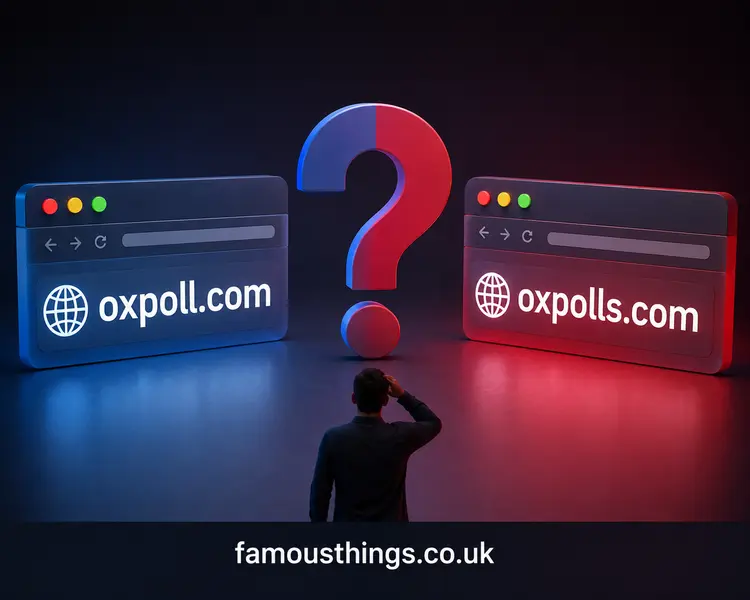
Many internet users assume changing one letter in a web address doesn’t matter.
In reality, every registered domain is independent.
For example:
- example.com
- examples.com
These can belong to completely different owners.
The same principle applies here.
If you’re looking for a specific publication or platform, always confirm the complete address shown in your browser before signing up, downloading files, or sharing personal details.
Understanding Brand Identity
Strong online brands remain consistent across every page.
Reliable websites usually keep the same:
Website Name
The same spelling appears throughout the homepage, articles, metadata, and navigation.
Editorial Information
Professional websites explain:
- who publishes the content
- how articles are reviewed
- how corrections are handled
- how readers can contact the team
These details help visitors understand whether a website operates transparently.
Consistent Categories
A trustworthy publication generally follows a clear editorial structure instead of publishing unrelated topics without explanation.
Consistency makes it easier for readers—and search engines—to understand what a website is about.
Trust Signals Every Visitor Should Check
Before trusting any unfamiliar website, spend a minute checking a few important details.
HTTPS Connection
A secure website should use HTTPS with a valid SSL certificate.
About Page
Legitimate websites usually explain their purpose, audience, and editorial approach.
Contact Information
Look for a dedicated contact page instead of relying only on a generic form.
Editorial Policies
Publications that explain how they research, review, and correct content generally provide stronger transparency.
Privacy Policy
A privacy policy helps users understand how information is collected and handled.
Domain Verification
Always confirm the exact website address before entering personal information or relying on important guidance.
Security and Reputation Overview
Whenever you visit a relatively new or unfamiliar website, it’s a good idea to evaluate its reputation before interacting with it. Instead of relying on a single review, look at multiple trust signals together.
For this domain, the available reports show a mixed but generally balanced picture.
Some security and reputation checks describe the domain as likely legitimate, while also recommending that users remain cautious because the website is relatively new, has limited popularity, and uses privacy protection for its WHOIS registration. None of these factors alone prove that a website is unsafe, but they are worth considering before sharing sensitive information.
The safest approach is to review several indicators rather than making a decision based on one score.
Positive Trust Signals
The available reports highlight several positive indicators.
- HTTPS with a valid SSL certificate
- No major phishing or malware blacklist detections during the reported scans
- Active website rather than a parked domain
- Domain registered for more than one year
- No broad consensus among major security engines that the site is malicious
These points suggest that the website should not automatically be treated as unsafe.
Factors That Deserve Attention
At the same time, some reports recommend additional caution.
Examples include:
- Hidden WHOIS registration
- Relatively low traffic ranking
- Limited domain history compared with long-established websites
- Some heuristic security findings that recommend further review rather than confirming malicious activity
These are warning signals to investigate further—not proof that a website is fraudulent.
How to Verify the Correct Website Before You Trust It
Finding the right website only takes a few seconds if you follow a simple routine.
Read the Complete Domain
Don’t stop after reading the brand name.
Always check the entire address shown in your browser.
Even a single missing letter can take you to another website.
Check HTTPS
Look for a secure HTTPS connection.
While HTTPS doesn’t guarantee legitimacy, it shows that the connection between your browser and the website is encrypted.
Visit Important Pages
Professional websites usually provide pages such as:
- About
- Contact
- Privacy Policy
- Terms and Conditions
- Editorial Policy (if applicable)
These pages help visitors understand who operates the website.
Evaluate the Content
Ask yourself:
- Is the content original?
- Does it explain topics clearly?
- Are important claims supported?
- Is the writing consistent?
A trustworthy website usually focuses on helping readers rather than publishing low-value pages.
Why Website Verification Matters
Many internet users only look at the logo.
Unfortunately, that’s one of the easiest things to copy.
Instead, pay attention to details such as:
- Complete domain name
- Browser address bar
- Website policies
- Contact information
- Consistent branding
- Overall content quality
These checks reduce the chances of confusing similar-looking websites.
Common Misunderstandings
Several misunderstandings appear repeatedly across search results.
Oxpoll and Oxpolls Are Always the Same
Not necessarily.
Similar names do not automatically mean the websites have the same owner or serve the same purpose.
A Good Trust Score Guarantees Complete Safety
No.
Trust scores are useful indicators, but they should never replace your own evaluation.
Hidden WHOIS Means a Website Is Fake
Many legitimate website owners use WHOIS privacy to reduce spam and protect personal information.
It should be viewed as one factor among many, not as proof of fraud.
Low Traffic Means a Website Cannot Be Trusted
New or niche websites often receive less traffic than established brands.
Popularity alone doesn’t determine credibility.
Best Practices Before Using Any New Website
Whether you’re visiting a publication, online tool, or digital service, these habits can help you stay safe.
- Verify the full domain name.
- Check whether HTTPS is enabled.
- Read the About and Contact pages.
- Review the Privacy Policy before sharing information.
- Avoid downloading unknown files immediately.
- Compare information from multiple reliable sources.
- Save the verified website as a bookmark after confirming it’s the correct destination.
These simple steps can prevent confusion and improve your online safety.
Why This Topic Creates Confusion in Search Results
One reason this keyword appears in different contexts is that various websites have used similar branding.
Some pages describe the platform as an online polling platform.
Others discuss Oxpolls as an editorial publication.
Because these names are almost identical, search results can contain information about different entities. Instead of assuming every result refers to the same website, always confirm which domain you’re viewing before relying on its content.
What Makes a Trustworthy Online Publication?


A reliable publication usually focuses on more than publishing articles.
It also explains:
Editorial Standards
Readers should know how articles are researched, reviewed, and updated.
Transparency
Ownership, policies, and correction procedures should be easy to find.
Helpful Content
Articles should answer real questions instead of being written only to target keywords.
Consistency
Every page should follow the same quality standards, writing style, and editorial direction.
These qualities help both readers and search engines understand the purpose of a website.
Frequently Asked Questions
What is Oxpoll?
Oxpoll is a search term that can refer to different websites depending on the domain being visited. Many users search for the platform when looking for online polling tools, while others are actually trying to reach Oxpolls, an editorial publication. Because the names are very similar, checking the complete website address is important before relying on any content.
Is the service the same as Oxpolls?
No.
Although the names are similar, they should not automatically be treated as the same website. The available information identifies Oxpolls as the publication name using the oxpolls.com domain, while other domains should be evaluated separately before assuming any relationship.
What is the official Oxpolls website?
According to the available brand information, the official publication uses oxpolls.com as its website. If you are specifically looking for that publication, always verify the complete domain before opening or sharing a page.
Why do people confuse Oxpoll and Oxpolls?
The names differ by only one letter.
Common reasons include:
- Mobile typing mistakes
- Search autocomplete
- Similar pronunciation
- Similar-looking search results
These small differences often lead users to different websites.
Is the website safe to visit?
Available reputation reports show generally positive indicators, such as valid HTTPS and no broad malware or phishing detections during the reported scans. However, some reports also recommend caution because of factors like the site’s relatively young age, low popularity, or heuristic findings. These signals should be considered together rather than treated as absolute proof of safety or risk.
How can I verify that I’m on the correct website?
Use this checklist:
- Read the complete domain name.
- Confirm HTTPS.
- Check the About page.
- Review the Contact page.
- Look for Privacy Policy and Terms.
- Verify the branding is consistent across the site.
Why is checking the domain name so important?
Different domains can belong to completely different owners, even if their names look almost identical.
Never assume that changing or missing one letter still leads to the same website.
Can I trust search results alone?
No.
Search results help you discover websites, but they do not replace your own verification. Always confirm the domain, review important pages, and evaluate the website before relying on important information.
What makes an online publication trustworthy?
Reliable publications usually have:
- Clear editorial standards
- Transparent policies
- Visible contact information
- Regular content updates
- Helpful, well-structured articles
- Consistent branding
These factors help readers understand how content is created and maintained.
What should I do if I find a confusing or similar-looking website?
If you are unsure:
- Double-check the URL.
- Compare it with the official website you intended to visit.
- Avoid sharing personal information until you are confident you are on the correct site.
- Bookmark the verified website to avoid future confusion.
Why does this keyword have different meanings online?
The available material shows that different websites use similar branding. As a result, search results may include pages discussing online polling, editorial publications, or specific domains. Reading the full domain name and understanding the context helps avoid confusion.
Final Thoughts
Searching for this name may seem straightforward, but the available information shows that the keyword can lead to different websites with similar names. Instead of assuming every result refers to the same brand, take a moment to verify the domain, review the site’s purpose, and check its trust signals.
If your goal is to visit Oxpolls, confirm that you are using the correct domain before relying on its content. If you land on another similarly named website, evaluate it independently rather than assuming an official connection.
Good online habits—such as checking the full URL, reviewing important policies, and understanding who operates a website—can help you avoid confusion and make better decisions. While trust scores and security scans provide useful context, they should be viewed as part of a broader evaluation instead of the only factor.
Ultimately, the safest approach is simple: verify first, then trust. That small habit can save time, reduce confusion, and help you confidently identify the website you actually intended to visit.